
The release of the NCCHC 2026 Standards for Health Services reflects the continued maturation of regulatory expectations in correctional healthcare. While the updates build on existing principles, they reinforce a clear directive: healthcare organizations must operate within frameworks that support consistent, accountable, and well-documented care delivery at all times.
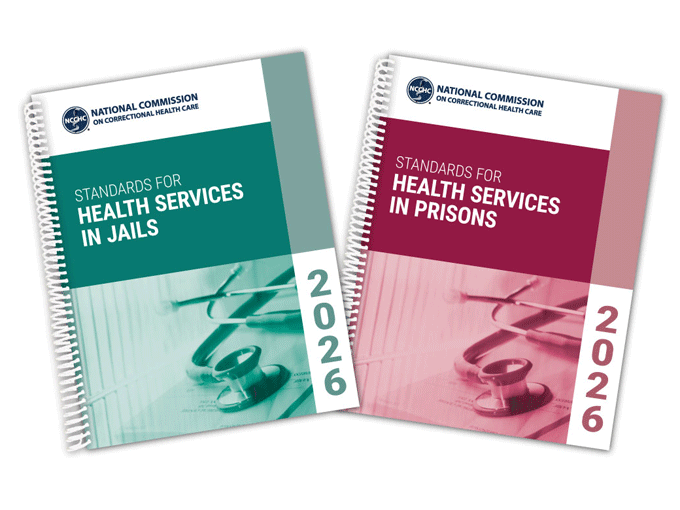
The 2026 standards place greater emphasis on operational alignment, documentation integrity, and system level accountability. Compliance is no longer defined by written policy alone, but by the ability to sustain compliant practices across clinical, administrative, and pharmacy operations. For many organizations, this highlights the growing gaps between regulatory requirements and the capabilities of legacy or disconnected systems.
As NCCHC standards continue to influence how care is delivered, managed, and evaluated, organizations are increasingly examining whether their health IT infrastructure is equipped to support compliance not just today, but as regulatory expectations continue to evolve.
A Shift from Policy to Proof
One of the most notable themes in the 2026 NCCHC standards is the emphasis on demonstrable compliance. Policies and procedures still matter, but surveyors are increasingly focused on whether organizations can show, clearly and consistently, that care is being delivered as intended.
This has implications across several domains, including:
- Clinical documentation and timelines
- Medication management and continuity of care
- Intake, screening, and ongoing assesments
- Coordination betwee custody, healthcare, and external partners
- Quality improvement and performance monitoring
In practice, this means organizations need systems that support standardized workflows without sacrificing flexibility, especially as populations, staffing models, and care needs evolve.
Technology as a Compliance Enabler, Not a Burden
The 2026 standards do not mandate specific technologies, but they do raise expectations around traceability, accessibility of records, and the ability to respond to audits and reviews with confidence.
Modern health information systems can play a critical role by:
- Centralizing clinical, pharmacy, and financial data
- Supporting role-based access and secure information sharing
- Enabling configurable forms aligned to NCCHC standards
- Providing reporting tools that support continuous quality improvement
- Reducing reliance on manual processes that introduce risk and inconsistency
When systems are purpose-built for regulated environments, compliance becomes a byproduct of good operations rather than an ongoing scramble.
Looking Beyond Corrections Alone
While NCCHC standards are specific to correctional healthcare, the operational challenges they address are familiar across many regulated and movement-restricted care environments. Behavioral health programs, community-based services, higher education health services, and other institutitional settings face similar pressures around documentation, accountability, and coordination.
Organizations that take a long-term view of technology investment are increasingly looking for platforms that can scale across programs, populations, and regulatory frameworks, rather than solving for a single use case at a time.
Preparing for 2026 and Beyond
As agencies and providers assess their readiness for the updated NCCHC standards, the most successful organizations will focus on three questions:
- Do our systems support consistent, auditable workflows across the continuum of care?
- Can we easily adapt documentation and processes as standards evolve?
- Does our technology help deliver care?
The answers to these questoins will not only shape outcomes, but also operational efficiency, staff satisfaction, and patient outcomes in the years ahead.
Fusion Health works with organizations operating in complex, highly regulated environments to deliver configurable, scalable health IT solutions designed for real-world care delivery. If you have questions about the 2026 standards or would like to discuss how your organization supports compliance through technology and workflow design, our team is available to help.
Submit an inquiry to connect with Fusion Health and continue the conversation.